Details
The details are what turn an invitation into something memorable. From printing methods and paper choices to finishing touches and assembly, these elements work together to shape how your invitations look, feel, and are experienced by your guests.
On this page, you’ll find an overview of the options we offer and where it makes sense to use it. There’s no expectation to choose everything – our role is to help you find the right balance for your suite.
We’ll guide you through the printing + finishing choices and help you understand how each detail contributes to the final piece. The options below are meant to inform and inspire, not overwhelm.
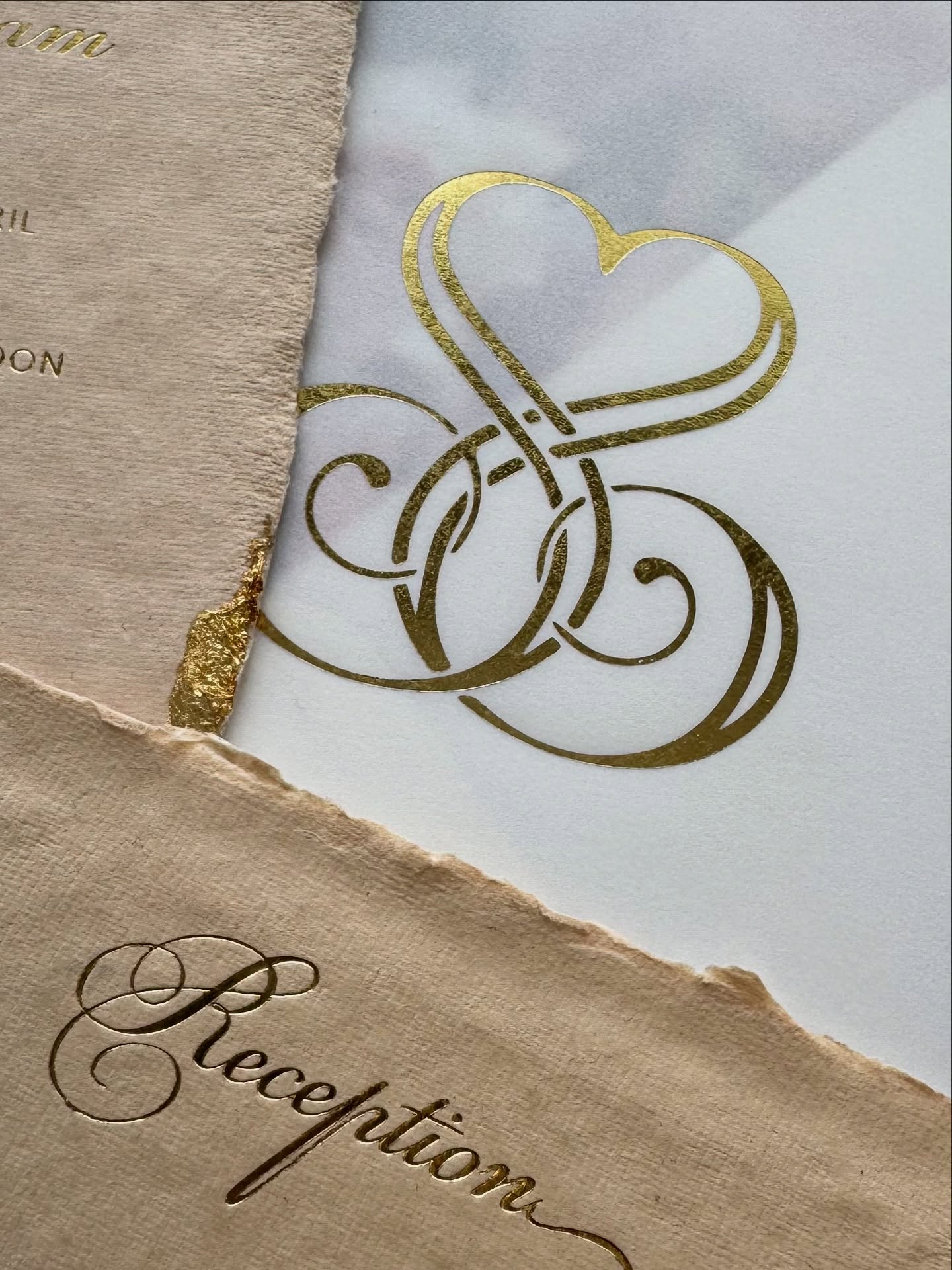
All about the details.
Paper
Paper sets the foundation for your entire suite. Weight, texture, and color all affect how your invitations feel and how printing and finishing details come to life.
Wax Seal
Wax seals are a timeless way to close invitations or wraps. Whether traditional or premade with an adhesive backing, they add texture and a sense of ceremony to the presentation.
Envelope Liner
Envelope liners add an extra layer of detail before you even see the invitation. They’re a great way to introduce pattern, color, or illustration and tie the suite together.
Laser Cutting
Laser cutting allows for intricate shapes and patterns with clean, precise edges. It’s often used for decorative elements, overlays, or modern designs that require fine detail.
Embossing
Embossing creates a raised impression in the paper without ink or foil. It adds texture and dimension in a subtle, tactile way. Add more detail with a sculpted die or registered with a foil color.
Guest Addressing
Guest addressing saves time and ensures the address printing matches the style, fonts, and color from the invitations. Use our address spreadsheet template or submit your list and we’ll do the rest.
Vellum Wrap
Vellum wraps add a soft, translucent layer around your invitation suite. They’re often used to hold pieces together while adding texture. Its a perfect spot to add a pattern or design detail.
Edge Coloring
Edge coloring adds color or metallic detail to the edges of your invitations for a bold, finished look. It works especially well on thicker stocks and layered pieces.
Die-Cutting
Die-cutting allows invitations to be cut into custom shapes like like ovals, arch, ornate frames, or more organize like a shell. This detail is often used to echo architectural elements, motifs, or design themes.
Belly Band
Belly bands wrap around your invitation suite to hold pieces together. They can be simple or decorated with a monogram or design and are a great place to add detail to your wedding invitations.
Pocket Folder
Pocket folders help organize multiple pieces within an invitation suite. They’re both practical and polished, keeping everything neatly assembled for your guests.
Edge Foiling
Similar to edge coloring but with a metallic foil directly on the edges of the invitations. It’s a striking detail that adds shine and contrast when viewed from the side.
Foil Stamping
Foil stamping uses heat and pressure to apply metallic or pigmented foil to paper with an impression. It adds shine and contrast and works well for names, monograms, and accent details.
Letterpress
Letterpress printing creates a deep impression in the paper using ink and pressure. It’s known for its tactile quality and timeless, handcrafted feel. All of our ink colors are mixed by hand.
Digital Printing
Digital printing is a versatile option for full-color designs, photography, or large solids. It’s often used for inserts and can be printed to complement letterpress or thermography printing.
Engraving
Engraving is a traditional printing method that creates raised lettering through a recessed plate. It’s refined and formal, often chosen for the most classic invitation styles.
Thermography
Thermography produces raised text by applying heat to ink, creating a glossy, dimensional finish. It’s commonly used as a cost effective alternative to engraving.
Ribbon
Ribbon adds softness and texture to an invitation suite. It can be used to tie pieces together or as a decorative accent in a wide range of colors and materials.
Rounded Corners
Rounded corners soften the shape of an invitation and give it a finished, polished edge similar to die-cutting. This detail works well for both modern and classic designs.
Duplexing
Duplexing bonds two or more sheets of paper together to create a thicker invitation. It’s often used to add weight, contrast, or a layered color effect.
Blind Deboss
Blind deboss creates a pressed impression in the paper without ink or foil. It adds subtle texture and depth, letting the paper and design speak quietly on their own.
Assembly
Assembly refers to putting all invitation components together, from layering pieces to securing wraps or bands. This step ensures everything is neatly arranged and presentation-ready.
Mounting
Mounting layers one printed piece onto another sheet of paper or board. It’s a way to introduce additional color, thickness, or border while maintaining a clean look.